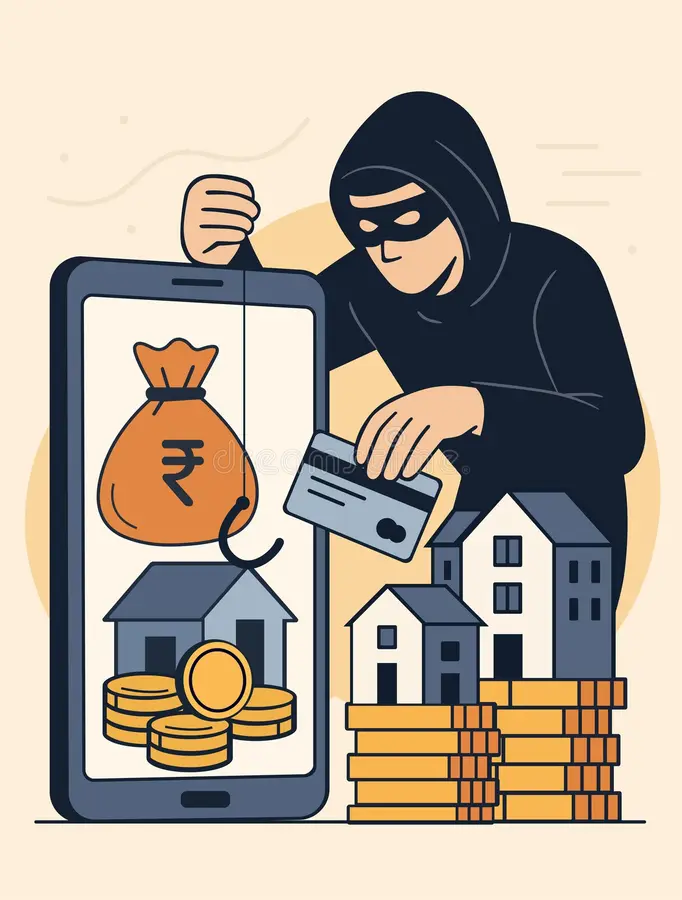
The call lasted 38 minutes. She thought she was helping. The FBI calls it the "grandparent scam." I call it what it is: a failure of the technology we trust to keep our families safe.
My mother is sharp. She has a master's degree. She ran a business for twenty years. She is exactly the kind of person who would tell you — before that Tuesday in March — that she'd never fall for a scam.
The caller said he was from her bank's fraud department. He had her last four digits. He knew her street name. He told her there was unusual activity on her account and that she needed to act immediately, quietly, and without telling anyone — especially not her children, who might "complicate things."
"Don't tell your kids. They'll just panic. This needs to stay between us and the bank."
That phrase — don't tell your kids — is in nearly every financial scam script targeting older adults. It's not an accident. Isolation is the mechanism. Once a target is separated from their support network, the rest follows predictably.
She caught herself. Barely. But most people don't.
The scam industry is more sophisticated than your bank
Modern phone scammers operate like businesses — because they are. They have scripts, managers, quality assurance. They A/B test which opening lines convert better. They have customer profiles, often purchased from data brokers, that include your parents' names, addresses, and sometimes account information.
A typical script includes:
• An urgent problem requiring immediate action
• A reason to keep the call secret from family
• A specific, plausible-sounding authority figure
• Escalating pressure as the call continues
• A request that feels reasonable at first (verify your account) before becoming extreme, wire funds to a "safe account" or use the nearest crypto ATM to transfer cash to oblivion.
These aren't amateur operations. They're running playbooks that have been refined over millions of calls. And until now, there has been no equivalent sophistication on the defense side.
You've probably already set up call-blocking on your parents' phone. Robokiller, Hiya, maybe the carrier's built-in spam filter, or iOS 26’s built in automatic screening for iPhone users. These tools do something — but they're working on the wrong problem.
They look at the incoming number. They check it against a database. If the number is flagged, they block it. Apple took it a step further, AI is now answering unknown numbers and looking for context, a step in the right direction.
But scammers don't use flagged numbers. They spoof local numbers, rotate through burner lines, use VoIP services that look legitimate. The number is a decoy. And with all of that, once your loved one answers that call, there is nothing to protect them anymore besides their own intuition. The real threat is what's said during the call — and right now, no one is listening for that.
The fraud doesn't happen because of who's calling. It happens because of what they say once you pick up.
What protection actually looks like.
We started building Calmo because we kept hearing versions of the same story. An adult child who found out weeks later, after the damage was done. A parent who was embarrassed and hadn't said anything. A family that lost not just money, but trust in each other afterward.
Calmo works as a phone plan — you port your parent's existing number over, keep their same coverage, nothing on the phone changes. In the background, our AI model listens for the conversational patterns that define fraud built into the network: urgency, secrecy, pressure, gift card requests, wire transfer language, IRS or bank impersonations, and the list goes on.
When those patterns appear, Calmo ends the call and notifies you. Your parent doesn't have to recognize the scam themselves. The technology does.
This isn't surveillance. It's the opposite.
The most common thing we hear when we describe this is: "Wait, you're listening to my mom's calls?"
We understand the instinct. But consider what's happening right now, without Calmo: a stranger is calling your parent, using psychological manipulation to extract financial information, and no one in your family knows it's happening until it's too late.
Calmo doesn't store calls. It doesn't transcribe conversations. It runs a real-time analysis for fraud patterns and acts only when those patterns are present. The alternative isn't privacy — it's vulnerability.
We're not launched yet. We're building carefully because we think the stakes demand it. But we're opening an early access list for families who want to be first.
If you have a parent or loved one who you worry about — this is for you.